
Most homeowners think of a roof as one thing: shingles. But shingles are rarely what fails first. On the roofs we inspect across Nashville, Franklin, Brentwood, and Murfreesboro, leaks almost always start at the small parts that connect, vent, and seal the roof: pipe boots, vents, flashing, drip edge, and valleys. The good news is that most of these are small repairs, not a new roof. Here's a quick tour of what's up there, how each part fails, and what the failure looks like from the ground or from inside your attic.
Ridge Vents and Box Vents: How Your Roof Breathes
A ridge vent is the low, continuous strip along the peak of your roof. Box vents (sometimes called turtle vents) are the square caps scattered across the upper slope. Both let hot, humid air escape the attic so the shingles stay cooler in a Middle Tennessee summer and the decking stays dry in winter.
Box vents are metal or plastic, and after years of sun and storms the seams rust, the caps crack, or the nails back out and the vent lifts. Ridge vents can be torn loose by straight-line winds, and the end caps are a common weak point. A blocked vent is a failure too: if insulation was blown in carelessly, the roof isn't breathing.
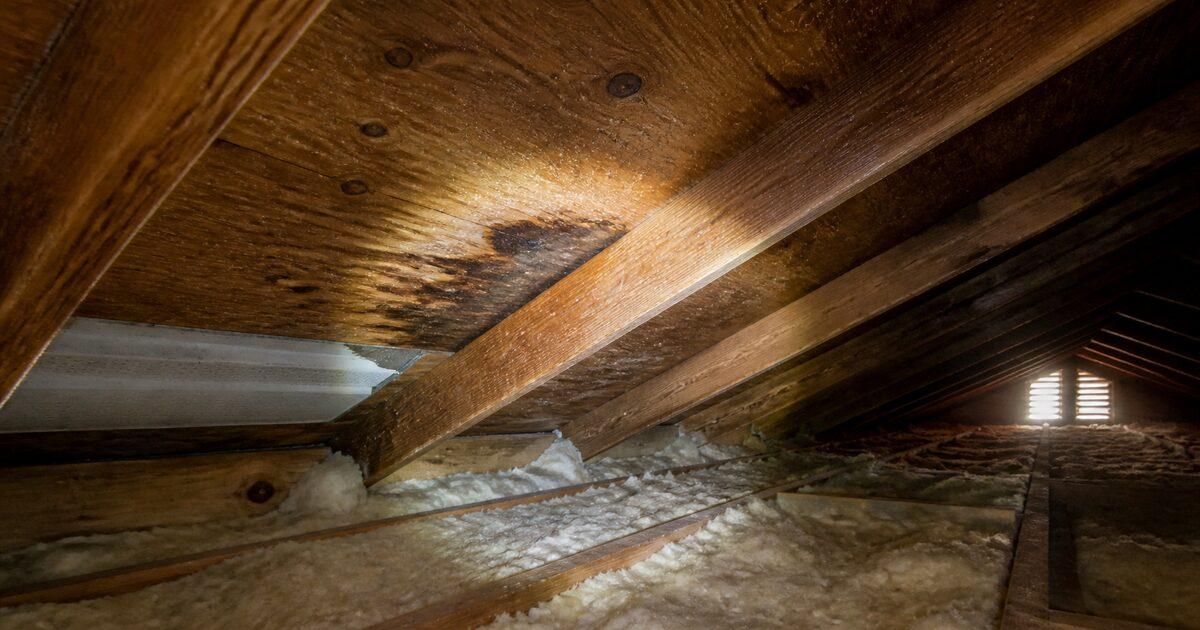
From the ground, look for box vents that sit crooked, show rust streaks below them, or have gaps at the base. From the attic, look for daylight around a vent or a ring-shaped stain beneath it. If your attic feels damp or you've seen frost on the nails in winter, our article on attic condensation explains what's going on.
Pipe Boots: The Most Common Leak on a 10- to 15-Year-Old Roof
Every plumbing vent that pokes through your roof is sealed with a pipe boot: a metal or plastic base with a rubber collar that hugs the pipe. The rubber is the problem. The Tennessee sun bakes it year after year, and somewhere around the ten-to-fifteen-year mark the collar dries out, splits, and pulls away from the pipe. From then on, every rain sends water straight down the outside of the pipe and into your ceiling.
In our experience this is the single most common leak we find on roofs that age. It's also one of the quickest fixes on the roof, and replacing a boot doesn't disturb the surrounding shingles.
What to watch for:
- A ceiling stain near a bathroom, kitchen, or laundry room, usually directly below where a vent pipe exits the roof
- From the ground with binoculars, a rubber collar that looks cracked, curled, or sunken around the pipe
- From the attic, a dark streak or damp insulation running down the vent pipe after a rain
- Boots buried in caulk, a sign someone patched the problem instead of fixing it
Step Flashing and Counter-Flashing at Walls and Chimneys
Wherever your roof meets a vertical surface, such as a second-story wall, a dormer, or a chimney, shingles alone can't make the seal. Step flashing is a series of small L-shaped metal pieces woven in with each course of shingles to direct water back onto the roof. At a chimney, counter-flashing is set into the mortar joints and folds down over the step flashing.
Flashing fails when the metal rusts through, when the sealant at the counter-flashing dries out, or when the house settles and the pieces pull apart. It also fails when a past repair relied on a bead of roofing cement instead of proper metal. Nashville's freeze-and-thaw winters crack that cement, and water finds its way in.
From the ground, look for rust stains running down siding or brick below a roof-to-wall joint, or flashing that's visibly lifted or missing. From the attic, chimney leaks show up as stains on the framing around the chimney, and wall leaks appear where the roof meets the wall.
Drip Edge: The Small Metal Lip That Protects Your Fascia
Drip edge is the L-shaped metal strip along the eaves and rakes that kicks water off the edge of the roof and into the gutter instead of letting it curl back under the shingles. On older roofs it's sometimes missing altogether.
When drip edge is bent, missing, or tucked behind the gutter instead of over it, water runs down the fascia board. You'll see peeling paint, soft or rotted fascia, and gutters pulling away because the wood behind them has gone bad. In the attic, look for staining on the decking a few inches in from the eave. If your gutters overflow or sag, a gutter cleaning is a good first step, and it comes with a look at the roof edge.
Valleys: Where Two Roof Planes Meet
A valley is the trough where two slopes come together, and it carries more water than any other part of the roof. Some valleys have exposed metal down the center; others are closed with shingles cut across the joint. Either way, the valley takes the full force of every Middle Tennessee downpour.
Valleys fail when the shingles along them wear thin, when debris builds up and holds water, or when hail knocks the granules off. From the ground, look for a valley that appears darker or smoother than the surrounding shingles, or granules piling up below the downspout beneath it. From the attic, a valley leak shows as a long stain along the rafter that follows the valley line.
Small Repairs Now Mean a Longer Life for Your Roof
Here's the point of this tour: nearly everything on this list is a roof repair, not a replacement. A new pipe boot, a reset box vent, a section of step flashing, or a run of drip edge can be done in a single visit and will keep a roof with years of life left from leaking into your home. Replacement makes sense when the shingles themselves are worn out, not because one small part gave up before the rest.
If you've noticed signs of trouble, schedule a free roof inspection with Roost Roofing. Call 615-657-ROOF (7663) or request an estimate at roostroofs.com. We protect your roost.
Protect Your Roost — Schedule Your Free Roof Inspection
Not sure what your roof needs? We'll inspect it for free, show you photos of what we find, and give you a straight answer in writing.